


One of my students from almost 2 decades ago made contact with me recently and wanted to know whether or not I had a video of a short story I related at that time to the MBA strategy class about the importance of testing hypothesis- challenging- testing positions but do so respectfully.
I joined the Army when I was 15… In those days you could misrepresent your age – 16 was required – but I was big for my age.
One of the first events was standing in the ranks as a trooper at the foot of Citadel Hill in Halifax for inspection by Gen. Rockingham. The Gen. I recall had chest for ribbons from the Second World War and the Korean War. During the inspection of the ranks he noticed 4 guns- artillery pieces– with three men standing close to the guns —with jobs to perform in order to enable fire the gun salute. But about 20 paces to the rear of each gun was a soldier standing smartly at attention but did not seem to perform any function.
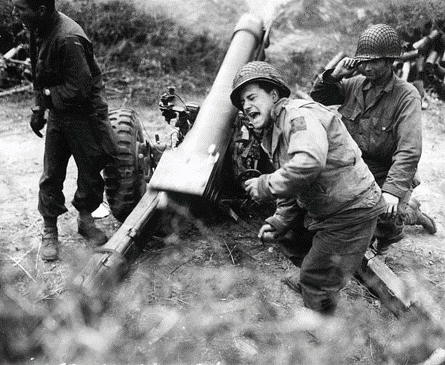
The general asked the Commander of the Guard — what role did that individual play?
Somewhat flustered the officer replied that he did not know but he would find out.
The officer at the end of the parade turned to the chief warrant officer and pose the question– response was the same– I don’t know sir but I’ll find out.
After passage of time the answer circulated throughout the unit… In 1955 Canadian artillery was still training using the old CMT Blue Books from World War I in 1917 setting out the training.
The role of the fourth man– to hold the horses!
Of course by 1955 guns were pulled by small trucks. And horses had long since disappeared.
But through the decades… The training was carried out by the book. The question of the 4th man was not raised…
The message for strategists is to recall that neuroscience tells us that 80% of the time when faced with a challenge we respond as we did last time without thought. In this new industrial age each one of you as strategists must test respectfully — challenge hypothesis, processes in order to validate their efficacy.
