


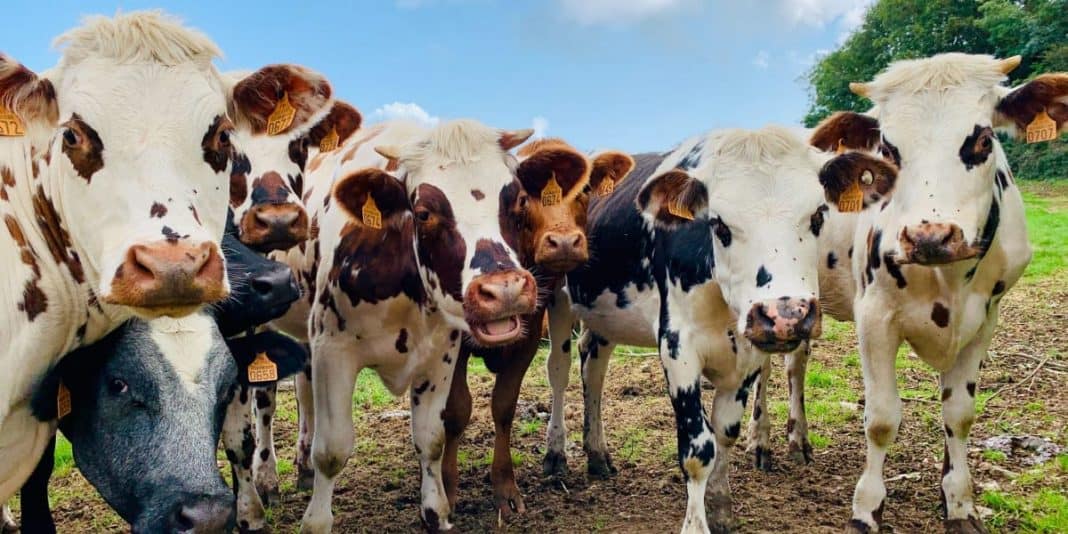
Technology aids livestock tracking.
An exciting, new, innovative, wireless telecommunication initiative may offer British Columbia and Alberta cattle farmers advance warning of infectious diseases.
A steer is relocated about five times during its lifetime. The federal and provincial governments and the Canadian Cattlemen’s Association recognized the need to improve the current tracking system used to identify the source of infectious disease outbreaks.
A faster, more innovative tracking system is required, and it appears that Kansas State University may have the answer.
The university is currently undertaking field trials of a wireless telemedicine tracking system for cattle. This telemedicine digital communication infrastructure can permit monitoring of the health of beef cattle while they are grazing, instantly tracking and recording the location of food sources and the watering troughs used. It can signal heart rates, temperature, oxygen saturation levels and the animals’ movement.
This Orwellian initiative is now possible using Bluetooth technology. Bluetooth is a wireless communication link operating in the unlicensed ISM band at 2.4 GHz using a frequency-hopping transceiver.
The wireless system is similar to the World Wide Web. The telemedicine tracking system can provide North American cattle farmers with an electronic network permitting warning of animals displaying the earliest symptoms of illness. Monitoring centres can issue immediate alerts to local veterinarians and the owners of sick animals.
It is expected that this wireless technology could identify many diseases within 12 hours of an animal becoming ill. This very early identification of hoof and mouth disease, for example, would enable segregation of the sick animal before the condition entered the most contagious stage.
Using sensors to monitor animal health is proven technology.
The U.S. National Science Foundation has been funded to test the wireless communications infrastructure and identify the best sensor for the program. These sensors will be implanted in the animals. Studies conducted by Kansas State University indicate that the implants will not adversely affect the safety of the beef.
Over time, the program will accumulate data for analysis and modelling, enabling early warning of a variety of specific diseases found in the beef industry. Adoption of this innovative telemedicine initiative would remove the possibility of abuse that exists in the industry today. Consumers would no longer rely on reluctant herd owners and veterinarians to report sick animals to the authorities.
So who pays? Alberta and British Columbia collectively provide more than 40 percent of Canada’s beef exports, consisting of 1.7 million head of live cattle and 373 tons of beef products, having a total value of $2.5 billion (2002).
Human Resources Development Canada reports 4,200 beef industry workers have lost their jobs because of discovering one animal with bovine spongiform encephalopathy (BSE), the brain-wasting illness commonly known as mad cow disease. As a result, the industry reports it is losing more than $11 million a day.
Alberta Minister of Agriculture Shirley McClellan recently commented that government and industry must be prepared to do whatever they can to restore public confidence and open borders to Canadian beef. Given this declaration, I urge her to consider this emerging technology.
The cost of an implant is forecast to be about $100 per animal, approximately the same as the cost to treat a sick animal. In addition, all Canadians have a moral duty to support our farmers. Today’s growing interdependence means fuel companies, truck drivers, pet food operators, farm equipment dealers, buffalo, elk and deer breeders, lumberyards, sheep producers, rendering plants and grain farmers are all affected. We must urge the federal and provincial governments to enable farmers to participate.
The evidence is not clear as to how many animals within each herd must have the telemedicine implants to monitor the health of the entire pack. Still, funding must be found to assist our farmers in shouldering the burden of this initiative.
Once Alberta and British Columbia farmers can participate in this initiative, national and international governments’ and consumers’ confidence in the safety of Canadian beef will be restored, and the impediments to free trade will be removed. We must not delay.
Note: This article was originally published in 2005.
